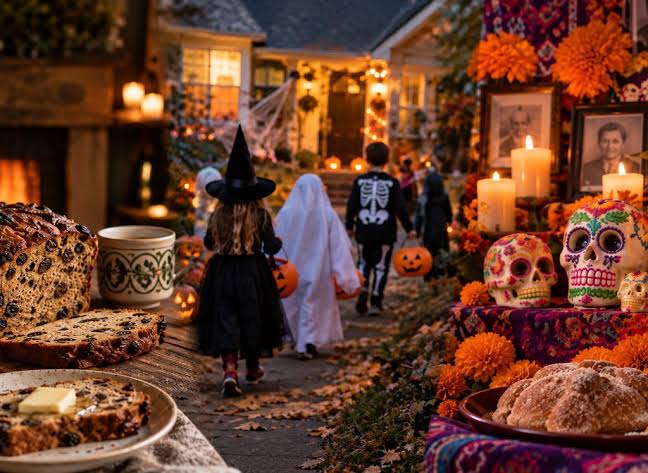
A Halloween gathering needs a clear moment for supper before the evening becomes a series of costumes, visitors and treats. Choose a savory meal people can eat comfortably, label fillings in ordinary words and prepare for interruptions without leaving the food unattended. The decorations can be playful while the dinner arrangement stays easy to understand.
Serve real food at an agreed point
Tell guests when the meal will happen and whether they should arrive ready to eat. A message that promises supper creates a different expectation from an invitation for a brief visit. If people have other plans that evening, a defined meal window helps them decide when to join. You do not need to anticipate every schedule; you need to communicate yours clearly.
Choose a main food with a recognizable role. Pierogies with a familiar side can be supper rather than another item on a snack table. Give the meal enough room and time to be eaten as such. Candy can remain part of the occasion without becoming the only food guests encounter because the savory dish was never clearly announced.
Ask about filling preferences and requirements before shopping. A crowd of costumes does not change the need to know whether a dumpling contains onion, cheese or meat. If several choices are necessary, keep the selection manageable. One well-understood alternative is more useful than an assortment that nobody can identify once cooked.
Plan the preparation around the package directions and the equipment available. Holy Perogy products are frozen and uncooked. Do not promise that supper will appear instantly whenever guests arrive. A meal prepared for an agreed time is easier to coordinate than an open-ended stream of individual requests.
Keep names and fillings easy to read
Use decorative names only if the ordinary description remains visible. Guests should not have to decode a Halloween joke to learn what is inside a dumpling. “Potato and onion pierogies” tells them something useful; a themed nickname alone does not. The label should be legible from where a person actually stands to serve.
Among the pierogi fillings to explore in Columbus, Sizzlin’ Fried Onion provides a full-size plant-based option with potato and onion. Those are the details to carry onto the serving label. The product does not need a seasonal reinvention to fit the gathering; it needs a clear place in the meal.
Keep the actual packages available for fuller ingredient information. A short serving label cannot replace the complete current label, especially when guests have specific needs. If a sauce or topping is added, describe that as well. The finished dish includes what you put around the dumplings, not only the filling named on the original bag.
Use separate dishes for different varieties when that is the clearest arrangement. Similar shapes can make a mixed platter difficult to interpret, particularly in a decorated or dimly lit room. Keep serving utensils with their dishes. If a guest has requirements beyond ordinary preference, follow the handling arrangement you agreed with them in advance.
Plan seating around the costumes
Think about how people will sit, reach and eat while wearing what they brought. A bulky costume may need more chair space, and a guest may want somewhere clean to place a mask or accessory during dinner. These small accommodations can make a seated meal more comfortable without turning the room into an elaborate event setup.
Provide stable surfaces for plates and drinks. A guest balancing both while adjusting a costume has little room to enjoy the food. If your living room cannot support that arrangement, serve supper at the table first and move afterward. A smaller seated meal may fit the home better than a sprawling buffet people must navigate in costume.
Keep decorative objects out of the serving path. Labels, utensils and plate space should be easy to reach without moving props. Avoid placing anything near the food that could be confused with an edible garnish. The table can still look festive while the practical items remain the most obvious things to use.
Offer napkins and suitable utensils at the start. Mini dumplings do not automatically solve awkward seating, and full-size dumplings can be comfortable when served on a proper plate. Choose the format for the meal you want, then make the place setting support it. Do not ask the food to compensate for missing table space.
Choose a serving setup that tolerates interruptions
Decide who answers the door or handles another recurring interruption while cooking is active. A host should not have to leave an uncooked-food preparation at a critical moment to greet every visitor. Ask a helper to take that small role, or arrange the meal at a point when someone can manage the household traffic.
Serve the amount intended for the current meal and handle additional food appropriately. A table that looks full for hours is not the same as a sensible service plan. Keep reserved uncooked food stored as directed and manage cooked leftovers according to relevant guidance. The gathering’s distractions make a clear plan more useful, not less.
Let guests know whether another serving opportunity is planned. If supper ends at a particular point, clear it properly rather than leaving uncertain food for late arrivals. A guest who misses the meal can be told the arrangement honestly. That is easier than trying to reconstruct a dinner while the rest of the evening is underway.
Give the savory meal its own place in the schedule. Once everyone has had a comfortable chance to eat, clear the plates and let the costumes and treats take the foreground.